
The boundary between professional motorsport and high-end sim racing has never been thinner. With the explosion of Direct Drive (DD) wheelbases, enthusiasts are investing upwards of $1,500 to bring the visceral feel of a race track into their homes. But does a premium simulator actually replicate the mechanical grip, tire degradation, and steering rack forces of a real homologated GT3 car?
By comparing real-world telemetry data from tracks like Spa-Francorchamps and Monza with the digital outputs of advanced physics engines, we can definitively answer whether modern sim rigs are authentic training tools or just sophisticated toys.
The Physics of Force Feedback in a Real GT3 Car
In a physical GT3 vehicle, such as the Porsche 911 GT3 R or the Ferrari 296 GT3, the steering wheel is the driver’s primary diagnostic tool. The forces transmitted through the steering column are entirely organic, generated by the interaction between the slick tires and the asphalt, filtered through the suspension geometry and the power steering pump.
When a driver hits a curb, the sudden spike in suspension load translates into an immediate mechanical shock. More importantly, as the front tires exceed their peak slip angle and begin to lose grip (understeer), the steering effort noticeably drops. The wheel goes “light.” This is not an artificial effect; it is the pure physics of the pneumatic trail shifting as the contact patch gives up. Real-world telemetry shows these force variations in continuous, fluid waveforms, completely free of digital latency.

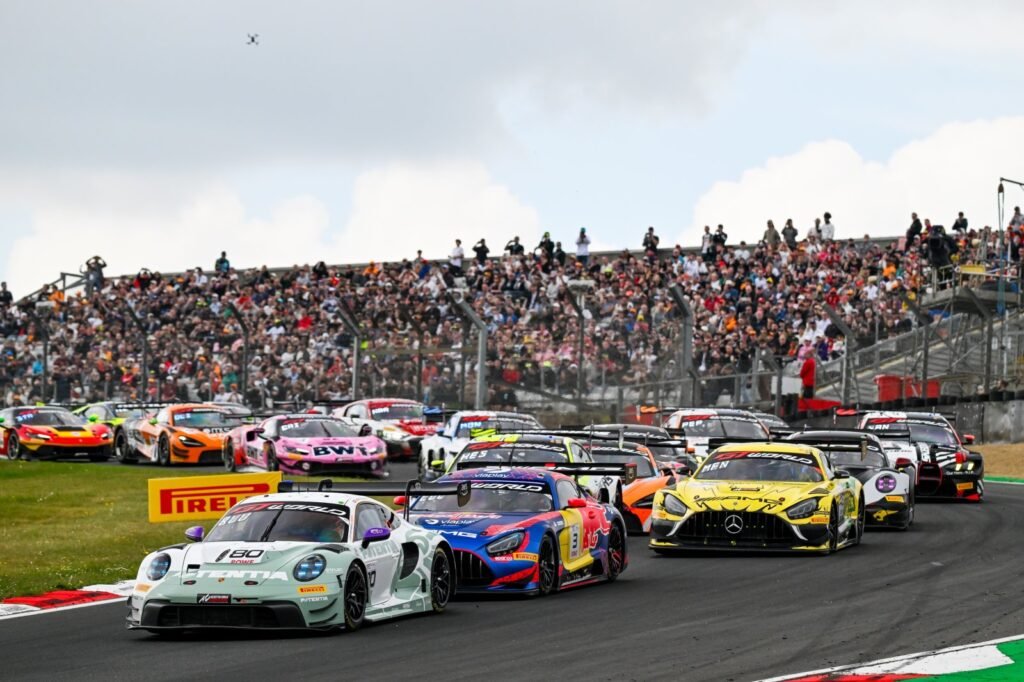
A GT World Challenge Race (copyright SRO)
How Direct Drive Motors Translate Digital Telemetry
A high-end Direct Drive wheelbase—unlike older gear or belt-driven models—couples the steering rim directly to a large industrial servomotor. Simulators like iRacing or Assetto Corsa Competizione (ACC) calculate tire load, suspension travel, and aerodynamic downforce at refresh rates often exceeding 300Hz.
This digital telemetry is then translated into electrical signals that tell the DD motor exactly how much torque to apply. When properly configured, a 15Nm or 20Nm Direct Drive wheelbase can almost perfectly mimic the self-aligning torque of a GT3 car. If you lose the rear end in the simulator, the software instantly calculates the shift in weight and tire friction, causing the steering wheel to rapidly counter-steer in your hands—mirroring the exact mechanical reaction of a real steering rack.
The Clipping Problem: When Simulators Lie
Despite the incredible fidelity, the digital translation is not flawless. The most significant discrepancy between real telemetry and sim racing force feedback is force clipping.
In a real car, hitting a massive kerb while already under high cornering load simply requires more physical effort from the driver. In a simulator, if the software requests 25Nm of torque to simulate that impact, but your wheelbase has a hardware limit of 15Nm, the motor “clips.” It outputs its maximum force and simply cuts off the rest of the telemetry data. During that split second of clipping, the wheel feels dead and heavy, robbing the driver of crucial surface detail that a real GT3 driver would still feel.

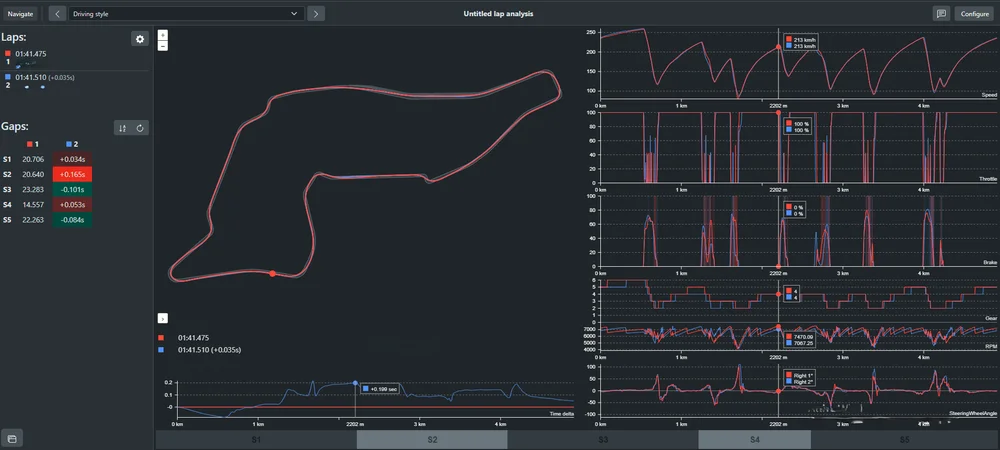
A telemetry graph (copyright Fanatec)
Track to Rig: The Verdict on Realism
So, does a $1,500 sim rig replicate the track? The answer is a definitive yes, but with a specific caveat.
From a purely biomechanical and telemetric standpoint, modern Direct Drive systems accurately reproduce the steering weight, the loss of traction, and the self-aligning torque found in real GT3 racing. They build the exact muscle memory required to catch a slide or find the limit of braking grip. However, they lack the “seat of the pants” G-force feedback. A simulator transmits 100% of the car’s dynamic state through your hands, whereas a real GT3 driver feels the chassis movement primarily through their inner ear and lower back.
Ultimately, investing in high-end sim racing hardware is no longer just about gaming. It is a legitimate, data-driven replication of motorsport physics, bridging the gap between digital telemetry and real-world track dominance.

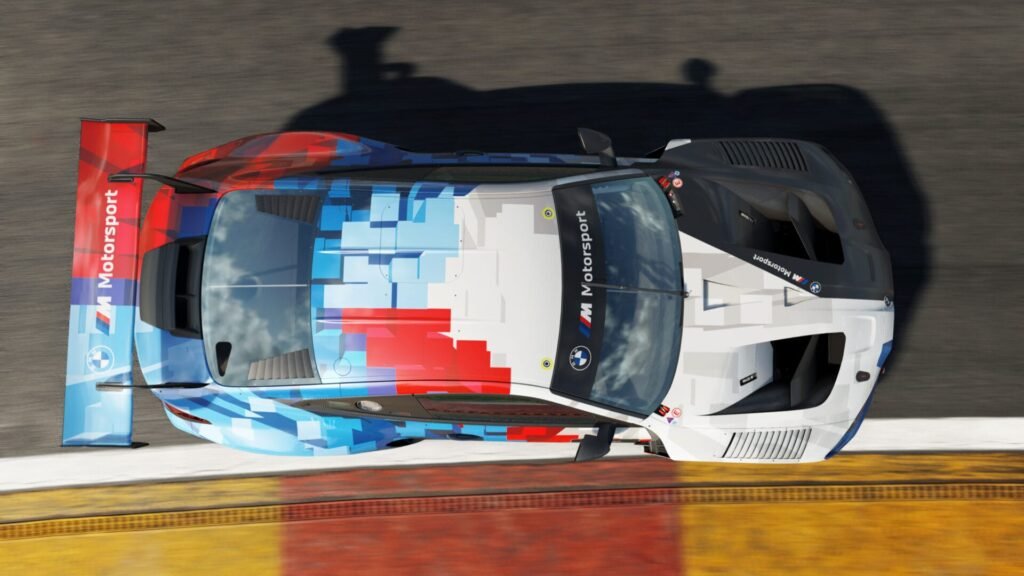
A BMW M4 GT3 EVO in Spa, Assetto Corsa Evo (copyright Kunos Simulazioni)